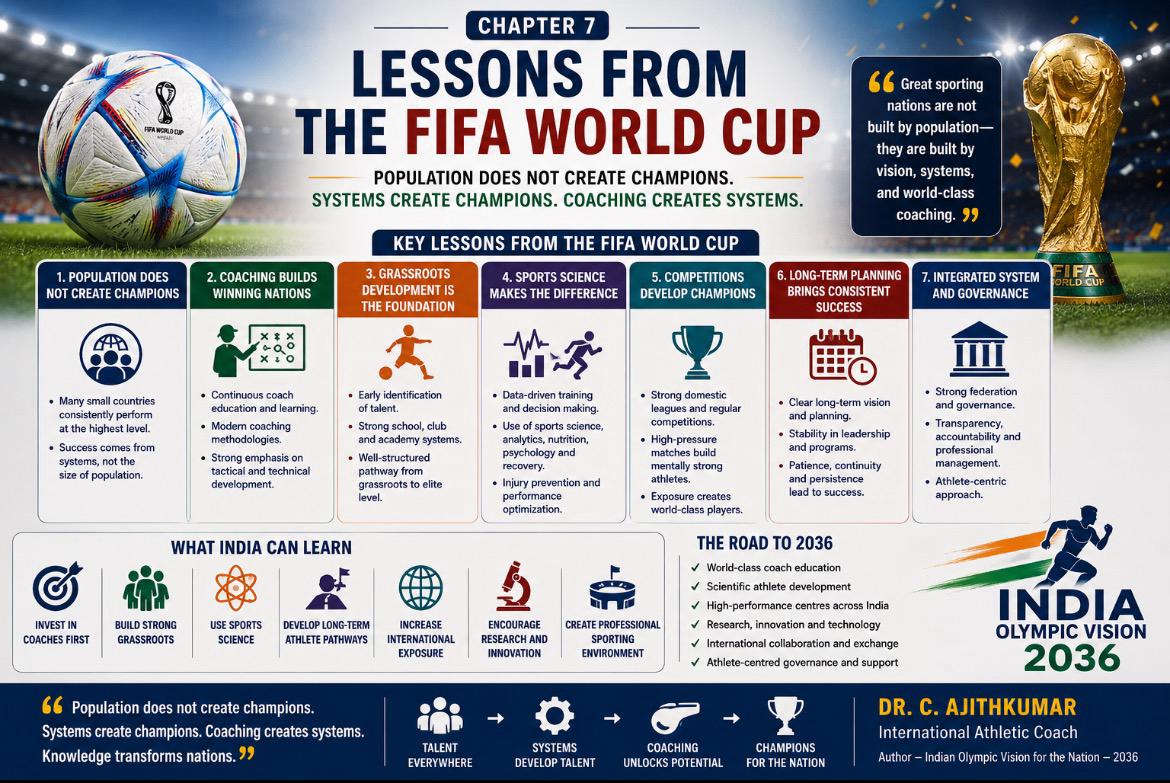

Universities Are the Future Olympic Factories of India Strengthening the All India Inter-University Athletics Meet as the Core Base for India's 2036 Olympic Vision Proposed by: Dr C Ajithkumar International Athletics Coach India 1. Executive Summary The All India Inter-University Athletics Meet represents the largest and most critical talent platform in Indian athletics, catering to athletes aged 18 to 25 years, the prime Olympic development window. This policy propos...
Universities Are the Future Olympic Factories of India
Strengthening the All India Inter-University Athletics Meet as the Core Base for India's 2036 Olympic Vision
Proposed by:
Dr C Ajithkumar
International Athletics Coach
India
1. Executive Summary
The All India Inter-University Athletics Meet represents the largest and most critical talent platform in Indian athletics, catering to athletes aged 18 to 25 years, the prime Olympic development window.
This policy proposes a structured, scientific, and accountable reform framework to transform inter-university athletics into a robust feeder system for India's 2036 Olympic Games. It addresses existing limitations such as inconsistent coaching quality, lack of athlete tracking, excessive competition load, and weak integration with national high-performance systems.
2. Background and Rationale
- Over seventy percent of India's elite athletes emerge from universities and service institutions
- Inter-university competitions act as the final mass-participation filter before elite sport
- With India's ambition to host the 2036 Olympic Games, universities must evolve into high-performance engines rather than remain competition organisers
3. Key Objectives of the Policy
- Build a standardised national university athletics system
- Create a long-term Olympic talent pipeline for the 2032 to 2036 cycle
- Reduce athlete dropouts and injury rates
- Align universities with the AFI and SAI high-performance vision
- Ensure equitable access to quality coaching and sports science support
4. Current Challenges
4.1 Structural Challenges
- Uneven infrastructure and coaching quality across universities
- Absence of national performance benchmarks
4.2 Performance Challenges
- Poor annual training periodisation
- Over-competition leading to burnout and injuries
4.3 Administrative Gaps
- No centralised athlete database
- Weak transition mechanisms from university to national camps
5. Policy Recommendations and Reforms
5.1 National University Athletics Performance Framework
Action Points
- Introduce national standards for coaching qualifications
- Implement athlete workload management protocols
- Standardise competition calendar planning
- Align inter-university calendars with the AFI annual competition plan
Outcome
Uniform performance standards and reduced injury incidence.
5.2 Zonal University High-Performance Centres
Action Points
- Identify one to two universities per zone as centres of excellence
- Upgrade facilities with sports science laboratories
- Establish strength and conditioning units
- Develop recovery and rehabilitation centres
- Enable shared access for neighbouring universities
Outcome
A cost-effective and regionally balanced high-performance ecosystem.
5.3 Long-Term Athlete Development and Olympic Tracking System
Action Points
- Create a national university athlete database
- Track performance trends and injury history
- Monitor growth and maturation data
- Place identified athletes under structured four to eight-year Olympic cycles
Outcome
A clear and measurable pathway from university sport to national and international podiums.
5.4 Rationalised Competition and Load Management Policy
Action Points
- Cap the number of annual competitions per athlete
- Introduce mandatory rest and recovery windows
- Require sports medicine clearance for peak competitions
Outcome
Extended athlete careers and peak performance at major international events.
5.5 Coach Development and Accountability Program
Action Points
- Mandatory certification and continuing professional development for university coaches
- Annual performance reviews linked to athlete progression
- Evaluation based on injury prevention and ethical coaching practices
Outcome
A professional, accountable, and modern coaching workforce.
5.6 University and National Team Integration Mechanism
Action Points
- Joint talent camps with the Athletics Federation of India and Sports Authority of India
- Structured international exposure through World University Games and Asian University Championships
- Direct scouting from All India Inter-University Athletics Meets
Outcome
A seamless transition from university sport to elite international competition.
6. Implementation Roadmap
Phase I: 2026 to 2028
- Policy adoption and institutional alignment
- Creation of athlete database
- Rollout of coach certification programs
Phase II: 2028 to 2032
- Establishment of high-performance centres
- Implementation of Olympic athlete tracking
- Expansion of international exposure programs
Phase III: 2032 to 2036
- Performance optimisation
- Olympic podium preparation
- Creation of a sustainable legacy system for future cycles
7. Monitoring and Evaluation
- Annual performance audits
- Injury and dropout rate analysis
- Medal conversion analysis from university to national and international levels
- Oversight by an independent expert review committee
8. Expected Outcomes
- A strong and injury-resilient athlete pipeline
- Increased Asian and Commonwealth medal counts
- Olympic finalists and medal contenders by 2036
- A sustainable sports ecosystem beyond 2036
9. Conclusion
The All India Inter-University Athletics Meet must evolve from a competition platform into a national high-performance system.
By implementing this policy, India can ensure that its 2036 Olympic ambition is built on scientific preparation, institutional strength, and athlete-centric governance.
Universities are not merely centres of education. They are the future Olympic factories of India.