
Chapter 3 Why Coaching Determines Olympic Success Olympic champions are not created by talent alone. They are developed through knowledgeable coaches, scientific systems, and long term planning. 3.1 Introduction Throughout Olympic history, every great athlete has had one common factor behind their success, a great coach. The coach is far more than an instructor. A coach is an educator, mentor, scientist, strategist, psychologist, leader, and lifelong learner. Behind ...
Chapter 3
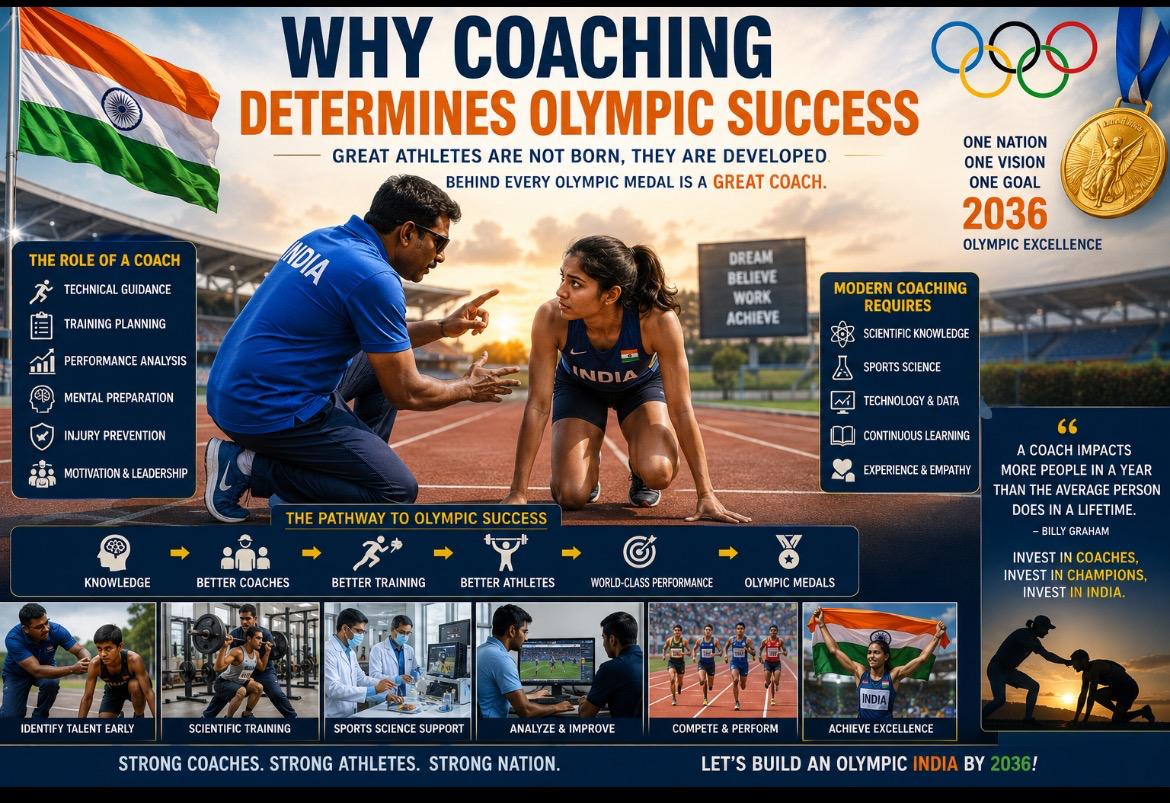
Why Coaching Determines Olympic Success
Olympic champions are not created by talent alone. They are developed through knowledgeable coaches, scientific systems, and long term planning.
3.1 Introduction
Throughout Olympic history, every great athlete has had one common factor behind their success, a great coach.
The coach is far more than an instructor. A coach is an educator, mentor, scientist, strategist, psychologist, leader, and lifelong learner. Behind every Olympic medal lies years of careful planning, technical correction, physical preparation, mental conditioning, injury prevention, and performance analysis.
As India prepares for the 2036 Olympic Games, the country must recognize one fundamental truth.
The quality of coaching determines the quality of athletic performance.
No nation has become an Olympic powerhouse without investing heavily in coach education and development.
3.2 The Coach: The Most Important Human Resource in Sport
While infrastructure, equipment, funding, and technology are essential, the coach remains the most valuable human resource in high performance sport.
A coach transforms potential into performance by:
- Identifying talent at an early age.
- Designing long term athlete development programmes.
- Teaching correct technical skills.
- Developing physical fitness.
- Building mental resilience.
- Preventing injuries.
- Managing competition preparation.
- Inspiring athletes to achieve excellence.
A knowledgeable coach can maximize the use of limited resources, whereas outdated coaching methods can limit even the most talented athletes.
3.3 Olympic Success Begins with Coaching
Every Olympic champion follows a carefully planned journey that begins years before the Games.
The coach guides the athlete through every stage of development.
Foundation Stage
- Physical literacy
- Fundamental movement skills
- Enjoyment of sport
- Basic technique
Development Stage
- Technical mastery
- Physical conditioning
- Competition experience
- Tactical awareness
High Performance Stage
- Sports science integration
- Performance monitoring
- Individualized training
- International competition exposure
Elite Stage
- Olympic qualification
- Peak performance planning
- Recovery optimization
- Mental preparation
- Medal winning performance
Without expert coaching at each stage, athletes rarely achieve sustained international success.
3.4 Modern Coaching Has Changed Dramatically
| Traditional Coaching | Modern Coaching |
|---|---|
| Experience based | Evidence based |
| Observation | Video analysis |
| Stopwatch | GPS and electronic timing systems |
| General training | Individualized programmes |
| Trial and error | Scientific planning |
| Limited recovery methods | Recovery science |
| Manual records | Digital performance analysis |
| Seasonal planning | Long term athlete development |
Modern coaching combines experience with scientific knowledge and technology.
3.5 Why Continuous Knowledge Updation Is Essential
Sport evolves continuously.
Every Olympic cycle introduces new research in:
- Exercise physiology
- Biomechanics
- Strength and conditioning
- Nutrition
- Sports psychology
- Recovery science
- Artificial intelligence
- Data analytics
- Injury prevention
- Performance monitoring
Knowledge that produced champions twenty years ago may no longer be sufficient today.
Therefore, coaches must become lifelong learners.
Continuous professional development should become mandatory for every coach in India.
3.6 Lessons from Leading Sporting Nations
Australia
- Australian Institute of Sport
- Continuous coach education
- Sports science integration
United Kingdom
- UK Coaching Framework
- Evidence based coaching
- High performance support teams
Japan
- Technical excellence
- Scientific research
- Continuous improvement
United States
- University research
- Professional coaching pathways
- Innovation in performance science
China
- Long term athlete development
- Centralized coach education
- Performance monitoring
These nations recognize that investing in coaches is one of the most effective investments in sporting success.
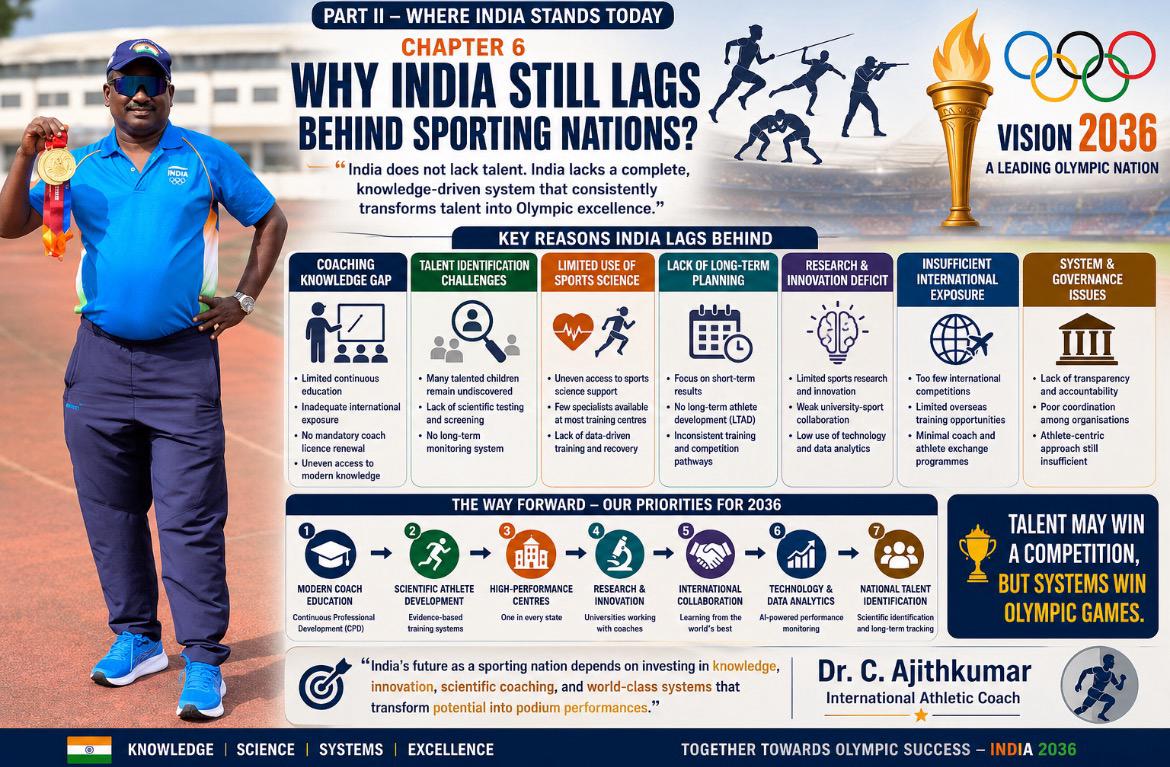
3.7 The Knowledge Gap in Indian Coaching
India has many experienced and dedicated coaches who have contributed immensely to athlete development.
However, modern international sport requires continuous updating of coaching knowledge.
- Limited opportunities for continuing education.
- Infrequent exposure to international coaching practices.
- Uneven access to sports science support.
- Limited use of performance technology.
- Inconsistent coach certification renewal.
- Insufficient engagement with sports research.
This is not a criticism of coaches. Rather, it highlights the need for a stronger national system that supports coaches throughout their professional careers.
3.8 Coaches Must Become Lifelong Learners
Medicine evolves. Engineering evolves. Technology evolves. Sport evolves even faster.
Coaches should update their knowledge every year through:
- International coaching conferences
- World Athletics and international federation courses
- Sports science workshops
- Online certifications
- Research publications
- Coach exchange programmes
- University collaborations
- High performance internships
A coach who continues learning continues improving.
3.9 A National Coach Knowledge Mission
India should establish a National Coach Knowledge Mission 2036 with the following objectives:
- Mandatory coach licence renewal every three to four years.
- Continuing Professional Development credits.
- National digital learning platform.
- International exchange programmes.
- Annual sports science conferences.
- Research grants for coaches.
- High Performance Coach Education Centres.
- Artificial intelligence and technology training.
- University partnerships.
- Performance based certification.
3.10 Coaching Determines Olympic Success
Knowledge
Better Coaches
Better Training
Better Athletes
World Class Performance
Olympic Medals
Every successful sporting nation has followed this pathway. India must do the same.
Conclusion
India's ambition to become a leading Olympic nation by 2036 cannot be achieved through infrastructure alone. Stadiums, equipment, funding, and technology are essential, but they become truly effective only when guided by knowledgeable coaches.
A coach is the architect of athletic excellence. Every technical correction, every training plan, every tactical decision, and every moment of motivation shapes an athlete's journey toward the Olympic podium.
If India is serious about becoming an Olympic powerhouse, it must place coach education at the centre of its national sports policy.
Investing in coaches is not an expenditure. It is an investment in the nation's future.
Olympic medals are won on the field of play, but they are designed in the minds of knowledgeable coaches. A nation that educates its coaches secures its future champions.
Key Policy Recommendation
India should declare Coach Education and Continuous Professional Development as a National Priority under the Olympic Vision 2036, ensuring that every coach has access to modern scientific knowledge, international exposure, and lifelong learning opportunities.