
The 100m sprint is more than just raw speed -- it's physics and biomechanics in action. From the explosive start to maintaining velocity against fatigue, Coach Dr. C. Ajithkumar explains the science that makes sprinting the purest test of speed.
The Science of the 100m Sprint - Explained by Coach Dr. C Ajithkumar
The 100m sprint is often called the "purest test of speed." But behind those 10 seconds lies a world of Physics and Biomechanics working together. Let's break it down step by step.
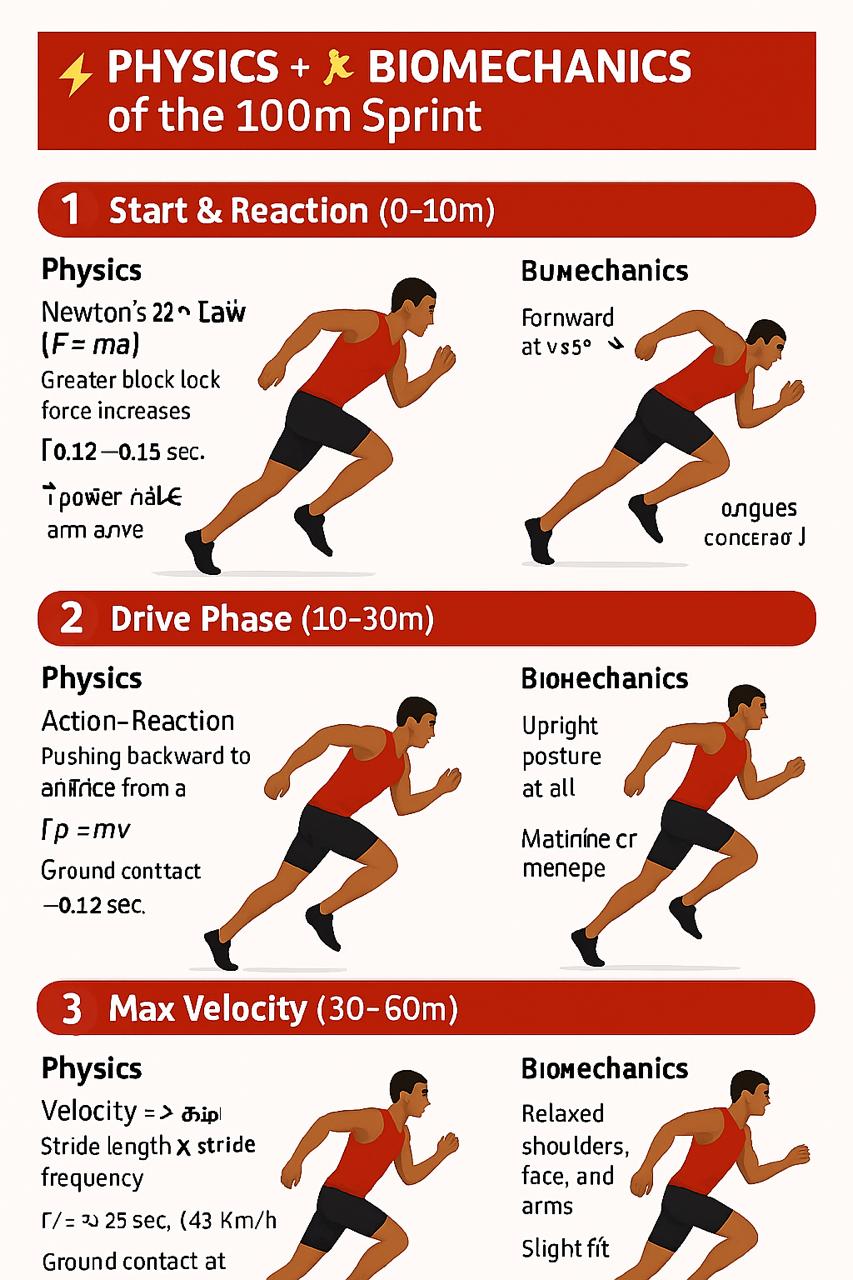
1. The Start (0-10m)
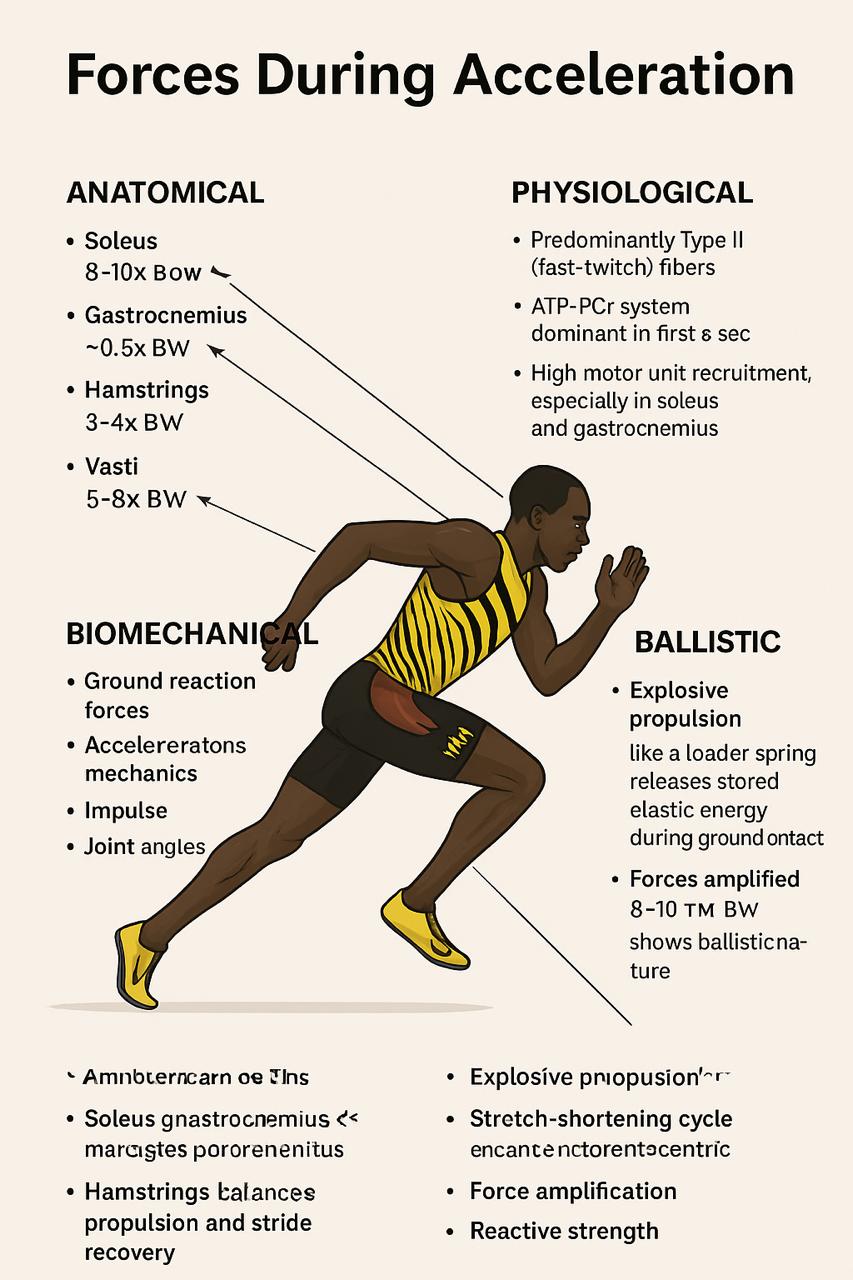
Physics: Newton's 2nd Law (F = ma) rules here. The sprinter must apply maximum force on the blocks to accelerate. Elite sprinters push with forces 4-5 times their body weight.
Biomechanics: The body leans ~45°, hips, knees, and ankles extend explosively in "triple extension," while arms drive powerfully to balance the movement. Reaction time (0.12-0.15s) is crucial -- anything faster is a false start.
2. The Drive Phase (10-30m)
Physics: Newton's 3rd Law (Action-Reaction) dominates. Every backward push into the track propels the body forward. Momentum (p = mv) builds with each stride.
Biomechanics: Sprinters stay low with a strong forward lean, powerful piston-like knee drive, and increasing stride length. Ground contact (~0.12s) allows horizontal force generation.
3. Maximum Velocity (30-60m)
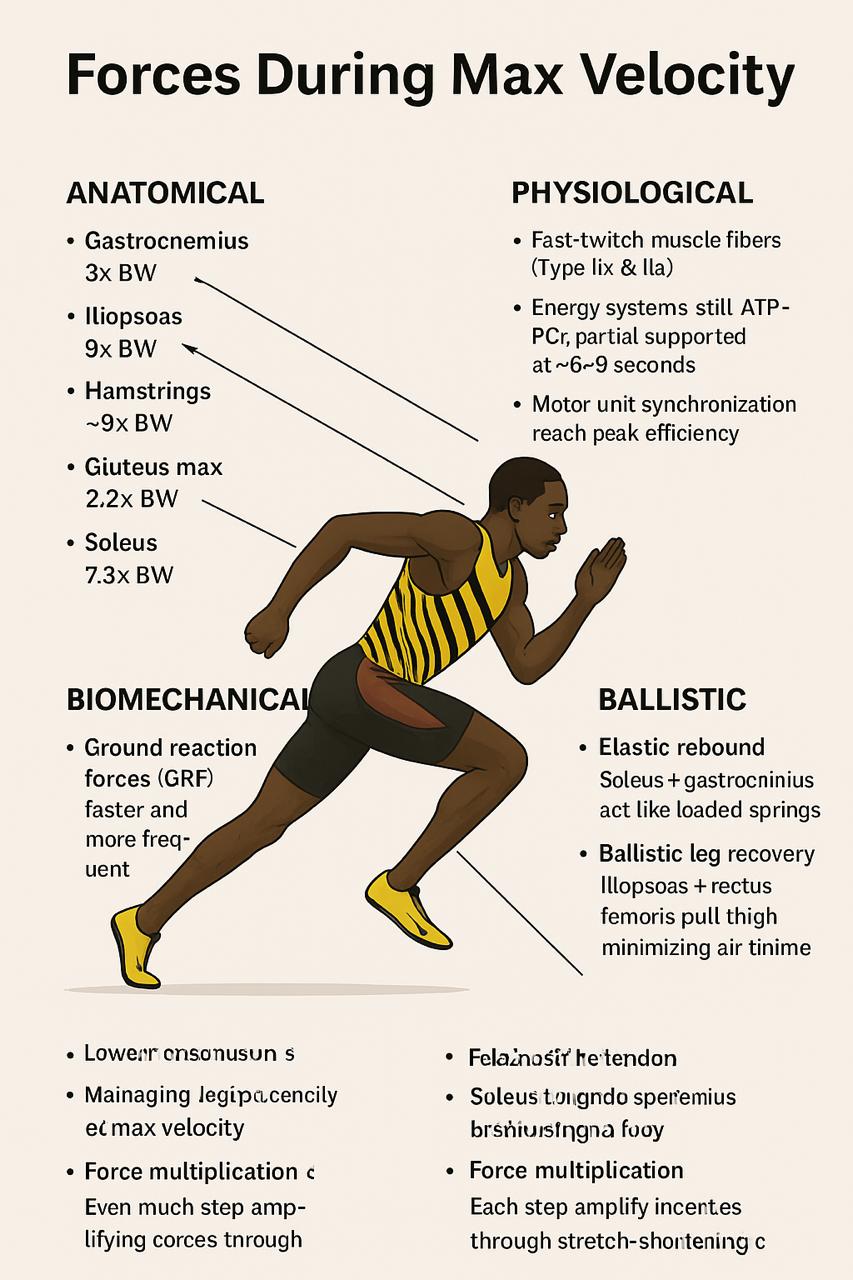
Physics: Velocity = Stride Length × Stride Frequency. Elite sprinters reach ~12 m/s (43 km/h).
Biomechanics: Upright posture, tall hips, and efficient "front-side mechanics" (legs cycling like wheels). Arms remain compact and relaxed. Ground contact shortens to 0.08-0.09s.
4. Speed Maintenance (60-100m)
Physics: Air resistance and muscle fatigue cause deceleration. Kinetic energy (½mv2) peaks -- efficiency decides the outcome.
Biomechanics: Relaxed shoulders, tall hips, and elastic tendon energy recycling maintain speed. Tension wastes energy and slows rhythm.
5. The Forces & Numbers Behind It
- Stride Length: 2.4-2.7m (men), 2.1-2.4m (women)
- Stride Frequency: 4.5-5 steps per second
- Ground Reaction Force: 4-5× body weight (~1000N per step)
- Ground Contact Time: 0.08-0.12 sec
- Flight Time: 0.12-0.14 sec
Conclusion by Coach Dr. C Ajithkumar
The 100m sprint is applied physics in motion.
- Physics explains the forces, acceleration, momentum, and energy.
- Biomechanics explains how the body applies those forces with technique and efficiency.
Together, they compress into 10 seconds of explosive power -- the reason why sprinting is both an art and a science.