
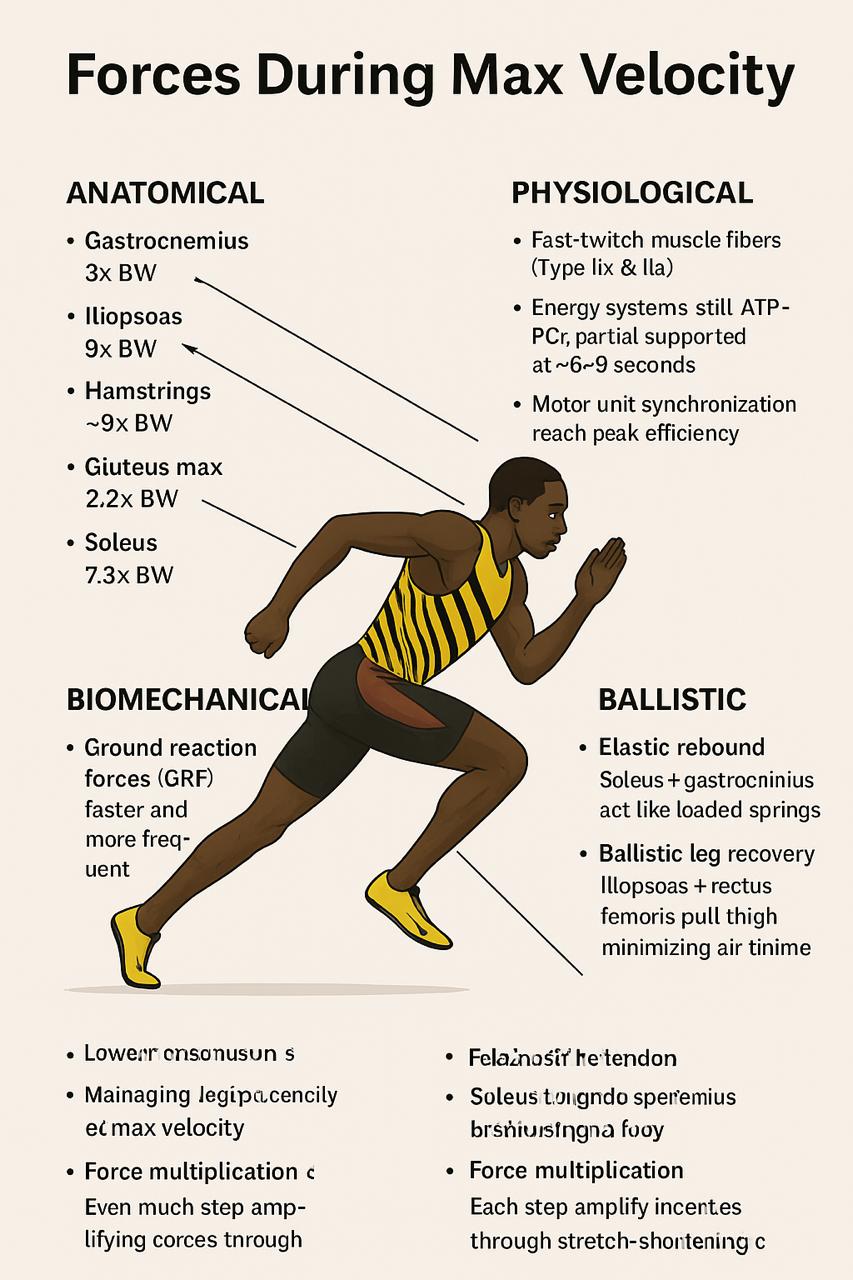
Maximum velocity sprinting is where biomechanics, physiology, and neuromuscular precision meet. This phase showcases how athletes recycle energy, control stride frequency, and maintain elastic stiffness for top speed performance.
Forces During Max Velocity in Sprinting - The Science Behind Top Speed
By Dr. C. Ajithkumar, International Athletics Coach
Anatomical View
- Gastrocnemius (3x BW): Supports ankle plantarflexion during late stance phase.
- Iliopsoas (9x BW): Powerful hip flexor that rapidly pulls the thigh forward during the swing phase.
- Hamstrings (~9x BW): Act as hip extensors and knee stabilizers; critical during late swing to decelerate the leg and prepare for ground contact.
- Gluteus Maximus (2.2x BW): Generates hip extension force during stance and stabilizes the pelvis.
- Soleus (7.3x BW): Maintains explosive ankle stiffness for effective elastic rebound.
- Rectus Femoris (2.8x BW): Assists in hip flexion and knee extension during the recovery stride.
Physiological View
- Fast Twitch Muscle Fiber Dominance (Type IIx and IIa): Enables high contraction speed and force production.
- Energy Systems: ATP PCr remains primary, with partial glycolytic support emerging around six to nine seconds into the sprint.
- Motor Unit Synchronization: Neural firing patterns reach peak efficiency, allowing maximum recruitment of hamstrings and iliopsoas.
- Elastic Storage: The Achilles tendon and hamstring aponeurosis recycle stored energy during each stride.
Biomechanical View
- Ground Reaction Forces (GRF): Lower in magnitude than during acceleration but occur more rapidly with contact times around 0.08 to 0.10 seconds.
- Stride Frequency: Driven by rapid leg recovery from the iliopsoas, crucial for sustaining speeds above 10 meters per second.
- Force Application: Vertical forces dominate to stabilize the center of mass during flight and contact.
- Hamstring Function: Dual role providing propulsion through hip extension and braking during the swing phase.
- Soleus Stiffness: Essential for maintaining reactive ground contact, keeping the athlete moving elastically and efficiently.
Ballistic View
- Elastic Rebound: The soleus and gastrocnemius act like loaded springs, releasing stored energy explosively with each step.
- Ballistic Leg Recovery: The iliopsoas and rectus femoris drive the thigh forward quickly, minimizing air time and maximizing stride frequency.
- Hamstring Ballistics: Manage high eccentric loads up to nine times body weight, preventing injury while preparing the next stride.
- Force Multiplication: Despite short ground contact times, each step amplifies output through the stretch shortening cycle.
Summary
At maximum velocity, sprint speed relies on hamstring strength, iliopsoas-driven hip flexion, and soleus stiffness. The athlete functions as a spring-loaded ballistic system, recycling elastic energy with every step to maintain ultra-fast ground contacts and peak efficiency.