
PART II - WHERE INDIA STANDS TODAY Chapter 7 Lessons from the FIFA World Cup Population Does Not Create Champions. Systems Create Champions. Coaching Creates Systems. The FIFA World Cup teaches us one powerful lesson. Great sporting nations are not built by population. They are built by vision, systems, and world class coaching. 7.1 Introduction The FIFA World Cup is the most watched sporting event in the world after the Olympic Games. Every four years, nations compet...
PART II - WHERE INDIA STANDS TODAY
Chapter 7
Lessons from the FIFA World Cup
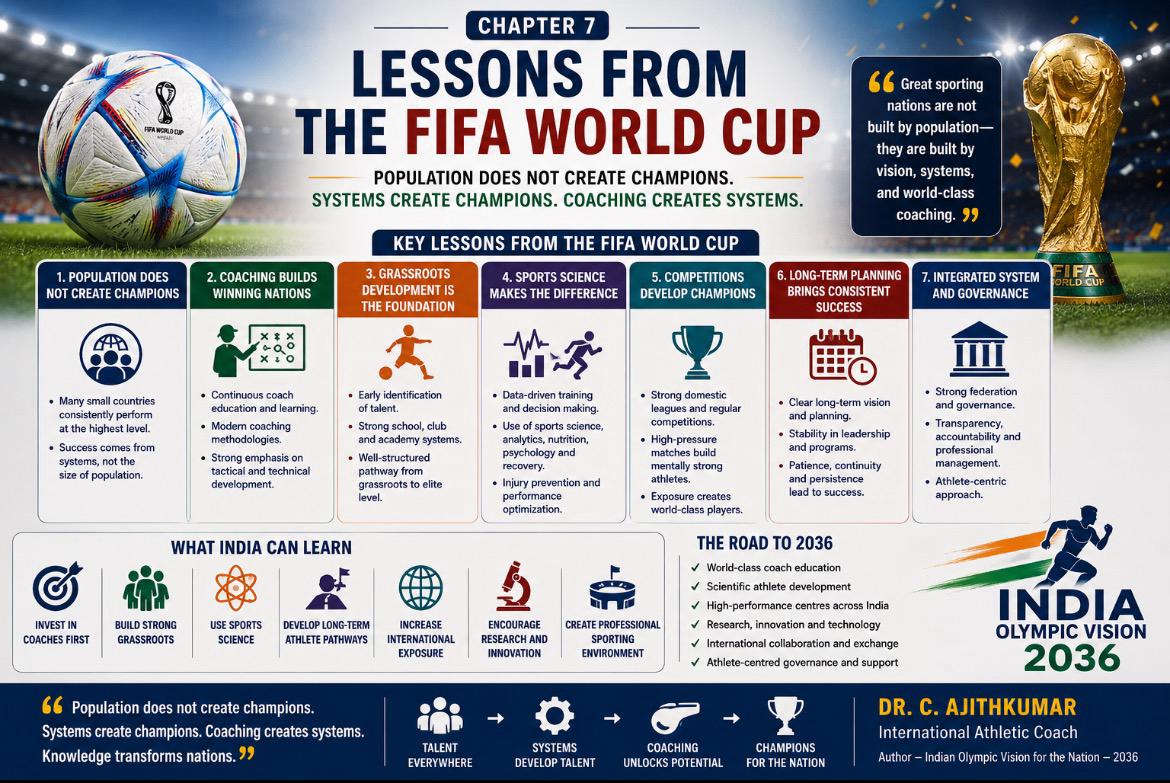
Population Does Not Create Champions. Systems Create Champions. Coaching Creates Systems.
The FIFA World Cup teaches us one powerful lesson. Great sporting nations are not built by population. They are built by vision, systems, and world class coaching.
7.1 Introduction
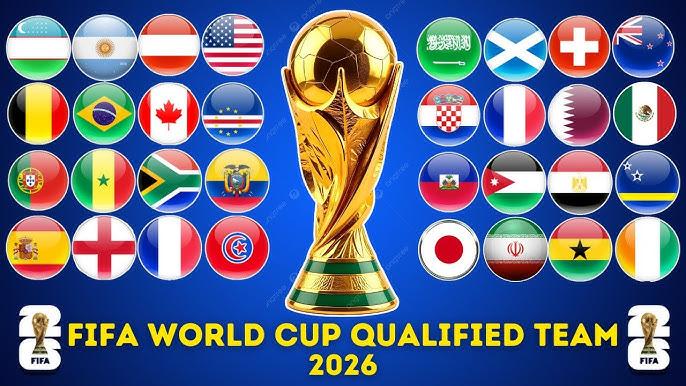
The FIFA World Cup is the most watched sporting event in the world after the Olympic Games. Every four years, nations compete not only with talented players but with decades of planning, scientific preparation, coaching excellence, and strong football systems.
Many countries with relatively small populations consistently qualify for the FIFA World Cup and produce world class players. Meanwhile, India, with more than 1.4 billion people, has struggled to qualify for the tournament.
This is not because India lacks talent.
It is because successful sporting nations invest in long term athlete development, coach education, sports science, grassroots programmes, and professional sporting systems.
The FIFA World Cup offers valuable lessons for every sport, not just football.
7.2 Population Does Not Create Champions
Many people believe that a large population automatically guarantees sporting success.
History proves otherwise.
Countries such as:
- Croatia
- Uruguay
- Belgium
- Portugal
- Netherlands
- Denmark
have produced world class football teams despite having relatively small populations.
Their success is built on:
- Scientific talent identification.
- Grassroots development.
- Qualified coaches.
- Professional leagues.
- Sports science.
- Long term planning.
Talent exists everywhere. Systems determine who succeeds.
7.3 Coaching Creates Winning Systems
Every successful football nation invests heavily in coach education.
Elite coaches continuously update their knowledge through:
- FIFA coaching licences.
- International seminars.
- Sports science education.
- Performance analysis.
- Modern training methodologies.
- Artificial Intelligence and performance data.
Great players are developed by great coaches.
Great coaches are developed through continuous learning.
7.4 Grassroots Development Is the Foundation
Every World Cup nation has a strong grassroots structure.
Children begin systematic training from an early age.
Successful countries integrate:
- Schools.
- Community clubs.
- Regional academies.
- Professional clubs.
- National federations.
These institutions work together as one athlete development pathway.
India must build similar systems across all Olympic sports.
7.5 Sports Science Makes the Difference
Modern football is driven by science.
Elite teams use:
- GPS performance tracking.
- Biomechanical analysis.
- Recovery monitoring.
- Nutrition planning.
- Sports psychology.
- Injury prevention.
- Match analytics.
Science supports every training decision.
India should integrate these practices into all high performance programmes.
7.6 Professional Leagues Develop Champions
Professional competitions expose athletes to high pressure environments.
Strong domestic leagues improve:
- Technical quality.
- Tactical understanding.
- Mental toughness.
- Match experience.
Every Olympic sport in India should develop structured national competition pathways.
7.7 What India Can Learn
The FIFA World Cup teaches India several important lessons:
- Invest in coaches before expecting medals.
- Build strong grassroots programmes.
- Use sports science in every training centre.
- Develop long term athlete pathways.
- Increase international exposure.
- Encourage research and innovation.
- Create professional sporting environments.
Olympic success begins with system development.
7.8 The Road to 2036
If India aims to become a leading Olympic nation by 2036, it must adopt the principles followed by successful FIFA World Cup nations:
- World class coach education.
- Scientific athlete development.
- Strong grassroots systems.
- High Performance Centres.
- Research and innovation.
- International collaboration.
- Athlete centred governance.
These principles apply equally to athletics, wrestling, boxing, badminton, hockey, shooting, and every Olympic discipline.
Conclusion
The FIFA World Cup is more than a football tournament.
It is a global classroom that demonstrates how vision, planning, coaching, and science transform nations into sporting powers.
India has the talent.
The next step is to build world class systems capable of converting that talent into consistent Olympic success.
Population does not create champions. Systems create champions. Coaching creates systems. Knowledge transforms nations.
Key Policy Recommendation
India should establish a National Coach Education and High Performance Development Framework aligned with global best practices. Continuous coach education, sports science integration, grassroots development, and international collaboration should become the foundation of India's Olympic Vision for 2036.
Dr C Ajithkumar
International Athletic Coach
Author, Indian Olympic Vision for the Nation 2036