
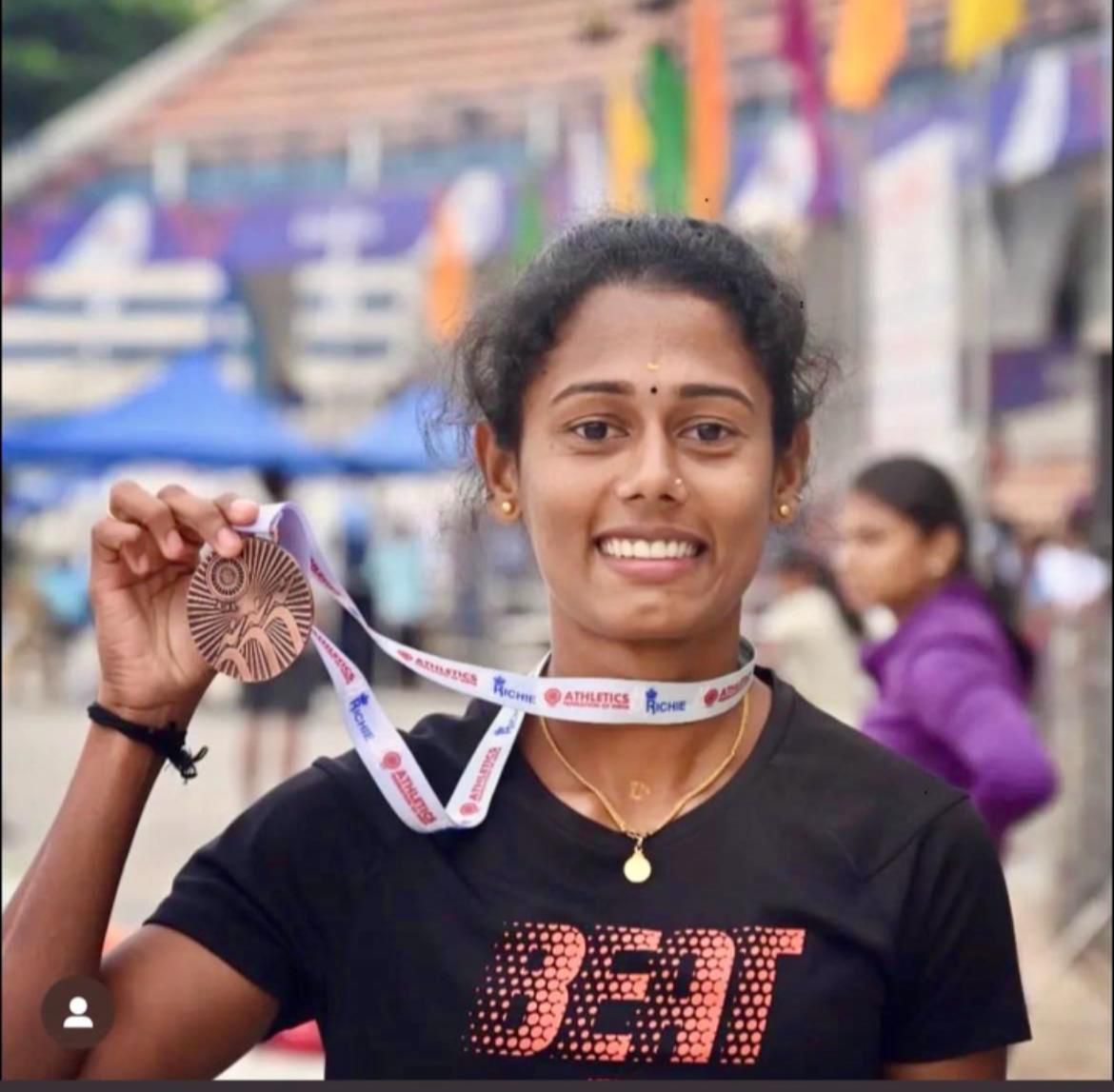
From an Unselected High Jumper to an Elite Indian Hurdler The Anjali C. Case Study: How Scientific Talent Identification Can Transform Athletic Careers By Dr C. Ajithkumar International Athletic Coach Introduction Elite athletes are not always discovered through early success. More often, they emerge when a coach recognizes qualities that others overlook and matches those qualities with the right event. The story of Anjali C. demonstrates the importance of scientific talen...
From an Unselected High Jumper to an Elite Indian Hurdler
The Anjali C. Case Study: How Scientific Talent Identification Can Transform Athletic Careers
By Dr C. Ajithkumar
International Athletic Coach
Introduction
Elite athletes are not always discovered through early success. More often, they emerge when a coach recognizes qualities that others overlook and matches those qualities with the right event. The story of Anjali C. demonstrates the importance of scientific talent identification, event specialization, and long-term athlete development within India's university sports system.
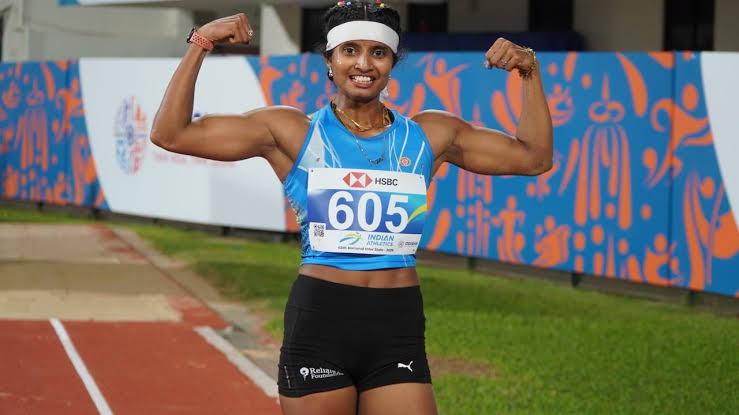
A native of Nenmara, Palakkad, Kerala, Anjali C. is the only daughter of Chellamani and Sumathi. A postgraduate in Journalism, she currently serves as a sportsperson with the Central Industrial Security Force (CISF) and is now recognized as one of India's leading women's 100 metre hurdlers.
An Unlikely Beginning
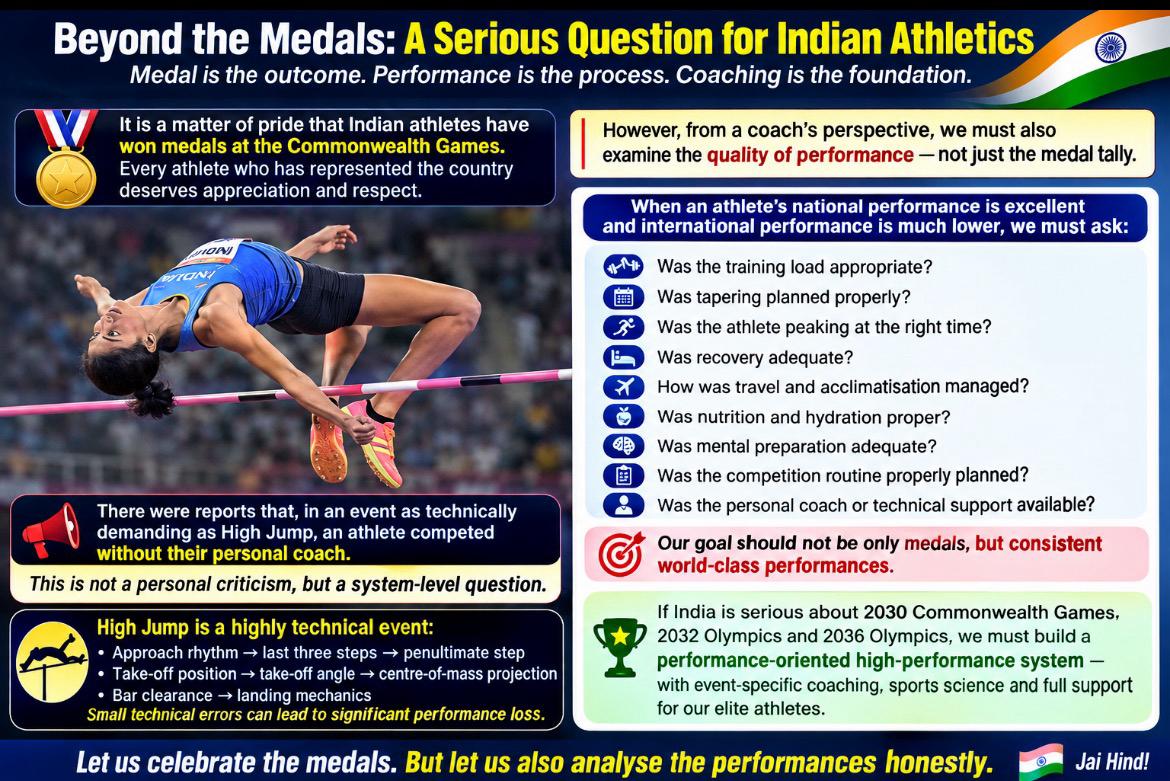
Anjali's athletic career began in the high jump while studying at Assumption College, Changanassery, under Mahatma Gandhi University, Kerala.
Her personal best was only 1.53 metres, and she was unable to secure a place in the college athletics team. By conventional standards, she would not have been identified as a future national-level athlete.
However, athletic potential cannot always be measured by early results alone.
Scientific Talent Identification
In 2022, Anjali joined Alva's Autonomous University under Mangalore University to pursue her postgraduate studies.
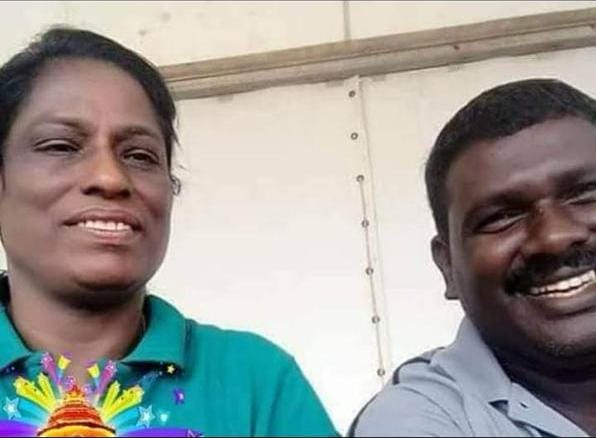
During this period, she came under the guidance of International Athletic Coach Dr C. Ajithkumar.
Following a comprehensive evaluation of her biomechanics, sprint mechanics, coordination, mobility, explosive power, and neuromuscular characteristics, Dr C. Ajithkumar concluded that her physiological profile was far better suited to the 100 metre hurdles and triple jump than to the high jump.
The decision was made to change her events completely.
It proved to be the defining moment of her sporting career.
Performance Transformation
Within a relatively short period, Anjali developed into one of India's leading university athletes.
Under the coaching of Dr C. Ajithkumar, she achieved:
- 100 Metre Hurdles Personal Best: 13.42 seconds
- Triple Jump Personal Best: 13.16 metres
- Mangalore University Record Holder
- Medal-winning performances at the All India Inter-University Championships
- Outstanding performances at the Khelo India University Games
- Success at the Senior Inter-State Athletics Championships
- Eight National Senior medals, including medals at the National Games
Every one of these achievements, including her Mangalore University record, performances at the All India Inter-University Championships, Khelo India University Games, Senior Inter-State Championships, and the National Games, was accomplished under the coaching programme designed and supervised by Dr C. Ajithkumar.
Today, Anjali continues her elite training at JSW Sports, where she remains one of India's most promising hurdlers.
A Larger Question for Indian University Sports
Anjali's success also highlights an important structural issue within India's university sports ecosystem.
Many universities celebrate medal-winning athletes but fail to invest adequately in the systems required to produce champions consistently. High-performance sport requires far more than access to a track. It demands qualified coaching, sports science, biomechanics, strength and conditioning, physiotherapy, recovery protocols, nutrition, and athlete welfare.
In many Indian universities, daily nutritional support for athletes remains alarmingly inadequate, with food allocations reported at approximately Rs. 116 per day. Such limitations stand in stark contrast to the expectations placed on athletes competing at national and international levels.
Lessons from Global High-Performance Systems
Countries with sustained Olympic success treat universities as high-performance development centres.
In the United States, approximately 80 percent of national team athletes emerge through the university system, where coaching, education, research, sports science, nutrition, sports medicine, and competition are fully integrated.
India's most productive athletic age group, between 18 and 25 years, also falls within the university system.
If universities fail to provide world-class development environments during these critical years, India risks losing a significant proportion of its Olympic potential.
As the nation works toward its Vision 2036 Olympic ambitions, stronger national oversight of university sports programmes is essential.
Institutions should be evaluated not only by the medals won by their athletes but also by the quality of coaching, infrastructure, nutrition, sports science support, athlete welfare, and long-term athlete development pathways they provide.
Beyond Medals
Anjali C.'s journey demonstrates that talent is rarely linear.
An athlete once unable to earn a place on her college high jump team became a multiple National Senior medallist, a university record holder, and one of India's leading hurdlers--not by chance, but through scientific talent identification, evidence-based coaching, disciplined training, and extraordinary personal commitment.
Her story is more than an individual success.
It is a compelling case study of what Indian athletics can achieve when coaching decisions are guided by science rather than convention.
India does not lack talent. It must ensure that every talented athlete finds the right event, the right coach, and the right environment to realise their full potential.
Conclusion
The transformation of Anjali C. from an unselected high jumper into one of India's leading hurdlers illustrates the power of scientific coaching and informed decision-making.
Her journey reinforces a simple but powerful truth: identifying talent is only the beginning. Matching athletes with the right event, providing evidence-based coaching, and creating a supportive high-performance environment are what ultimately produce champions.
As India prepares for future Olympic cycles, strengthening university sports systems, investing in coach education, and embracing scientific talent identification will be essential for unlocking the nation's immense athletic potential.
Dr C. Ajithkumar
International Athletic Coach